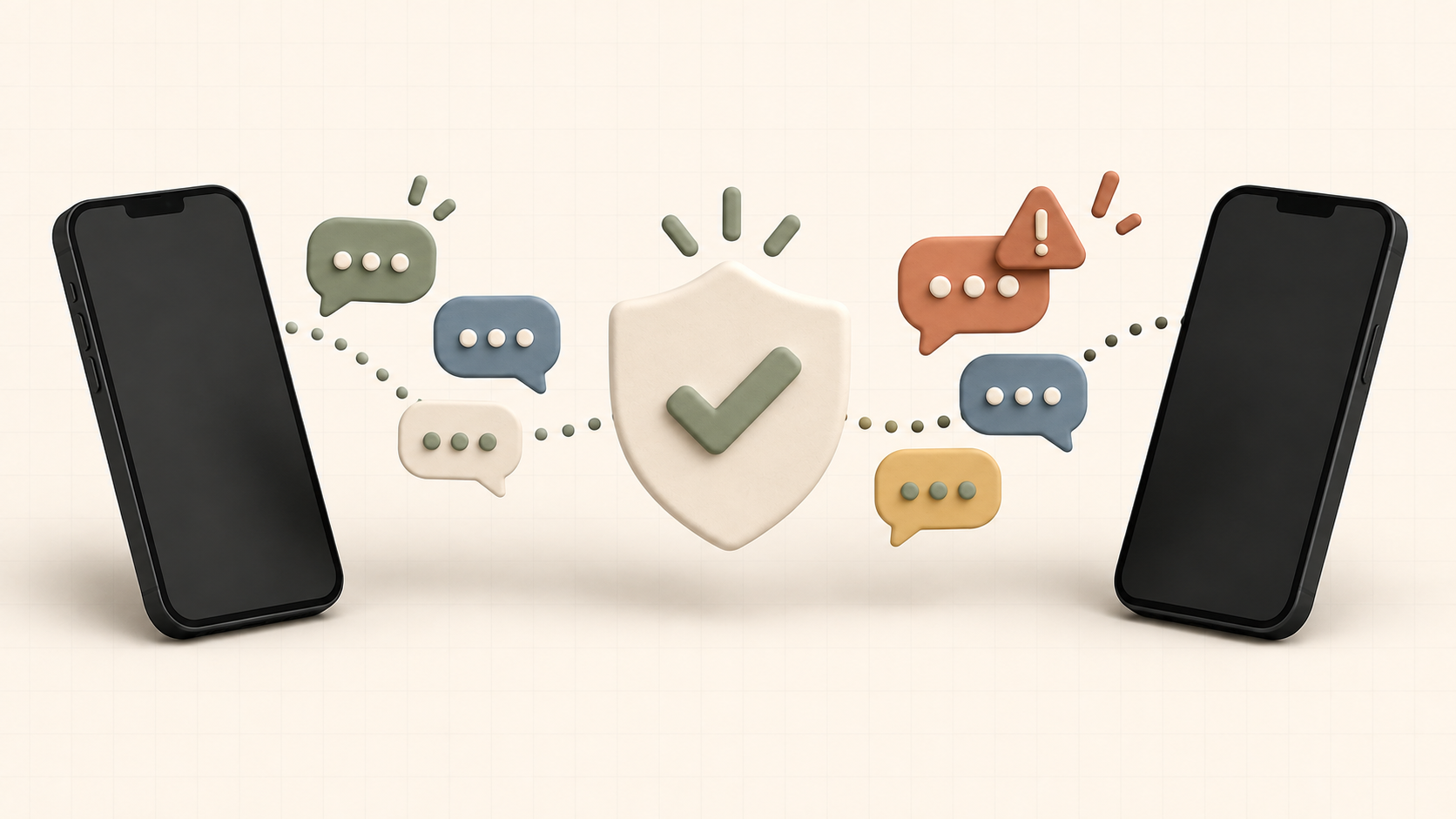
Most online friendships begin with ordinary uncertainty. You are learning how another person communicates, how often they reply, what they enjoy discussing, and whether the connection feels mutual.
An awkward message is not automatically a warning sign. A delayed response is not proof of dishonesty. What matters is the pattern—especially when someone repeatedly ignores boundaries, creates urgency, requests money or private information, or tries to make you feel responsible for their behavior.
These online friendship red flags can help you recognize when a new connection deserves more caution and decide what to do next.
What Is an Online Friendship Red Flag?
A red flag is a behavior or pattern that suggests an interaction may be deceptive, controlling, exploitative, or unsafe. It is information to consider, not a diagnosis of the person.
Some warning signs are serious on their own, such as a threat or a request for your password. Others become concerning through repetition. Someone sending two messages in a row may simply be enthusiastic. Someone demanding immediate access to you every day and punishing you for being unavailable is different.
Pay attention to:
- How the person responds when you say no
- Whether their words and behavior remain consistent
- Whether requests become more personal, urgent, or costly
- How you feel after repeated interactions
- Whether you are becoming isolated, pressured, or afraid
You do not need absolute proof of bad intentions before protecting your privacy or ending a conversation.
1. They Push for Instant Closeness
A new online friend may be excited to connect, but trust normally develops over time.
Be cautious when someone immediately describes you as their closest friend, says you are the only person who understands them, demands promises of loyalty, or pressures you to reveal deeply personal information within the first few conversations.
Rapid closeness can make later requests feel harder to refuse. Slow the pace and notice how the person reacts. A healthy connection can tolerate patience.
2. They Pressure You to Move Off-Platform Immediately
There are ordinary reasons to use another communication method, but urgency is worth noticing.
A person may push you toward a private or encrypted channel because they want to avoid platform reporting tools, create a less traceable conversation, or gain access to your phone number and other account information.
You can say:
I prefer to keep talking here until we know each other better.
Someone who respects you will accept that boundary. Repeated pressure, guilt, or anger after a clear answer is a stronger warning sign than the original request.
3. Their Identity or Story Keeps Changing
People make mistakes and explain themselves imperfectly. Concern grows when important details repeatedly conflict.
Examples include changing their age, location, job, school, relationship status, or reason for contacting you. They may also use profile images that do not match what they claim or avoid ordinary questions while requesting personal details from you.
Do not ask someone to send an identification document; that creates privacy risks for them and does not guarantee authenticity. Instead, limit what you share, keep the conversation on-platform, and judge whether the inconsistencies form a pattern.
4. They Avoid Every Reasonable Form of Verification
No one owes a stranger private documents, a home address, or an immediate video call. Privacy is not itself suspicious.
However, someone may deserve extra caution when they make significant claims, seek money or a meeting, and continually invent new reasons why no basic detail can ever be confirmed.
Verification should be proportional and safe. It might mean a live conversation at a mutually comfortable time, consistency across weeks of interaction, or independently checking a public claim. Never treat a photo, voice call, or social profile as complete proof of identity.
5. They Ask for Money, Gift Cards, or Cryptocurrency
Requests for money are among the clearest online friendship scam warning signs.
The story may involve travel, rent, medical care, a locked account, a business opportunity, an investment, equipment, or an emergency that supposedly cannot be solved any other way. Payment by gift card, cryptocurrency, wire transfer, or access to your financial account is especially risky because recovery may be difficult.
Do not send money because you are afraid of appearing uncaring. Do not receive or move money for someone else. If the situation is genuine, declining a financial role is still a reasonable boundary.
6. They Request Passwords or Sensitive Information
Never share:
- Passwords or one-time verification codes
- Banking or payment credentials
- Government identification numbers
- Copies of identity documents
- Answers to account security questions
- Your exact live location
- Information that could be used to recover an account
A scammer may claim they need a code to verify you, send you money, protect your account, or prove that you are trustworthy. Legitimate friendship does not require access to your accounts.
If you already shared credentials, change them immediately, enable available security protections, and contact the relevant service or financial institution.
7. They Use Guilt to Control Your Availability
Online friends do not need identical schedules or response times.
A controlling person may accuse you of betrayal when you do not answer immediately, demand to know where you were, discourage time with other friends, or repeatedly create crises that require your constant attention.
Support and responsibility are not the same thing. You can care about someone without becoming their only source of help or giving them unlimited access to you.
Try stating a concrete boundary:
I cannot reply throughout the day. I will answer when I have time, and I need you not to pressure me about response times.
Their response will tell you something important.
8. They Repeatedly Ignore Boundaries
Anyone can misunderstand a preference once. The red flag is the pattern after you communicate clearly.
Examples include continuing a sexual topic after you say you are uncomfortable, demanding private details you declined to share, contacting you through new accounts after a block, or treating every limit as something to debate.
A boundary does not require the other person’s agreement. If they keep crossing it, stop explaining and use the tools available to you.
9. They Demand Secrecy
Privacy is normal. Secrecy used to isolate or control you is not.
Be cautious if someone insists that you hide the friendship, delete messages, lie to people you trust, or avoid asking anyone else for advice. This is especially serious when combined with requests for money, intimate content, or an in-person meeting.
A safe connection can survive outside perspective. If you feel uncertain, describe the situation to someone you trust without forwarding another person’s private content unnecessarily.
10. They Pressure You for Intimate Content
No one is entitled to an intimate image, sexual conversation, or private detail. Pressure may sound flattering, disappointed, angry, or threatening.
Warning signs include:
- Repeated requests after you decline
- Claims that sharing will prove trust or affection
- Threats to leave, embarrass, or expose you
- Secretly saving or redistributing content
- Requests involving anyone under 18
If someone threatens to share an intimate image, do not send more material or pay them. Preserve the username, messages, dates, and relevant links if you can do so safely, then report the account.
The Chats Only Safety page explains how to request removal of nonconsensual intimate content and lists additional resources for adults and minors.
11. They Send Suspicious Links or Files
A link might imitate a login page, install harmful software, collect your location, or steal account credentials. The sender may claim it contains a photo of you, an urgent document, a reward, or proof of an emergency.
Before opening anything:
- Check whether the message fits the conversation
- Look carefully at the domain
- Ask the person what they sent through a separate message
- Avoid entering credentials after following an unexpected link
- Do not install unknown software or browser extensions
If a friend’s real account was compromised, their messages may still be dangerous even though you recognize the profile.
12. They Evade Blocks or Threaten You
Creating new accounts to contact you after a block, following you across platforms, exposing private information, or threatening harm are serious behaviors.
Do not continue negotiating. Preserve relevant evidence without engaging further, tighten your account privacy, tell someone you trust, and report the behavior to each affected platform. Contact local emergency services if anyone faces an immediate threat.
You may also need local legal or victim-support resources depending on the situation. Chats Only is not an emergency service.
Red Flags Versus Ordinary Awkwardness
New friendships are imperfect. People misread tone, become enthusiastic, forget a detail, or reply inconsistently.
Ask three questions when you are uncertain:
Is it a pattern?
One awkward moment may be a mistake. Repeated pressure or deception is different.
What happens when I set a boundary?
A healthy person may feel disappointed, but they adjust their behavior. A manipulative person may argue, punish, guilt, threaten, or find another way around the limit.
Is the risk increasing?
Notice whether the conversation is gradually moving toward money, sensitive information, secrecy, sexual content, or offline access.
You are allowed to be cautious even when you cannot answer every question with certainty.
Green Flags in an Online Friendship
Safety is not only the absence of obvious danger. Healthy online friends tend to:
- Accept “no” without retaliation
- Show consistent behavior over time
- Let closeness develop gradually
- Respect your other relationships and responsibilities
- Take responsibility for mistakes
- Ask questions without demanding private answers
- Contribute to the conversation rather than making every interaction a crisis
- Allow pauses without creating guilt
- Support reasonable safety precautions
The connection should become clearer and more comfortable with time, not more confusing and controlling.
For guidance on building that kind of relationship, read How to Make Friends Online Through Shared Interests.
What to Do When You Notice a Red Flag
1. Slow the interaction down
Do not make a decision under pressure. Stop sending new information, money, images, or credentials.
2. Set one clear boundary if it feels safe
You may learn more from the response than from another long discussion. You do not need to keep restating the same limit.
3. Preserve relevant information
Save usernames, dates, links, transaction details, and threatening messages when doing so is safe and lawful. Do not redistribute harmful or intimate content.
4. Protect your accounts
Change exposed passwords, review active sessions, enable available security features, and contact your bank or payment service if financial information was involved.
5. Use platform controls
Mute, leave, block, and report. Use the in-service report option when possible because it may preserve useful context.
6. Get outside perspective
Tell someone you trust. Manipulation becomes harder to recognize when the other person has made the situation feel secret or urgent.
7. Contact appropriate help
If there is immediate danger, contact local emergency services. People in the United States can report suspected fraud at ReportFraud.ftc.gov. Suspected online child sexual exploitation can be reported to the NCMEC CyberTipline.
If You Already Sent Money
Act quickly. Contact the bank, card issuer, payment application, wire service, gift-card company, or cryptocurrency platform involved. Ask whether the transaction can be stopped, reversed, or flagged as fraud.
Change any exposed credentials and save receipts, account information, messages, and transaction identifiers. Report the account to the platform and the incident to the appropriate fraud-reporting or law-enforcement service in your location.
Do not pay a second person who promises to recover the money for an upfront fee. Recovery offers can be another scam aimed at people who have already experienced a loss.
If Someone Threatens to Share an Intimate Image
Do not send more images or money. Preserve the threat and information needed to locate the account or content, then report it.
If the depicted person was under 18 when the image was created, NCMEC’s Take It Down may help prevent sharing on participating platforms. Adults can explore StopNCII.org. Do not download or forward sexual content involving a minor.
Meeting an Online Friend in Person
An online friendship never has to become an in-person one. If you independently decide to meet:
- Take time to establish trust
- Choose a populated public location
- Tell someone where you are going and when you expect to return
- Arrange and control your own transportation
- Keep your phone charged and accessible
- Avoid depending on the other person for lodging or money
- Leave if you feel pressured or uncomfortable
Someone who cares about your safety will not object to reasonable precautions.
Frequently Asked Questions
What are the biggest red flags in an online friendship?
Requests for money or passwords, pressure for intimate content, repeated boundary violations, threats, secrecy, changing identity details, and attempts to contact you after a block are significant warning signs.
How do I know whether an online friend is real?
No single photo, profile, message, or call proves identity. Look for consistency over time, keep sensitive information private, and use proportional verification before making financial decisions or meeting in person.
Is it a red flag if an online friend replies slowly?
Not by itself. People have different schedules and communication habits. Focus on the overall pattern of honesty, mutual effort, and respect rather than one delayed response.
Is it safe to move a conversation to another app?
It can be, but doing so may reveal additional information and remove platform safety tools. Stay where you feel comfortable, understand what information the new service exposes, and be cautious when someone creates urgency.
What should I do if an online friend asks for money?
Do not send money or account access. Slow down, verify claims independently, and discuss the situation with someone you trust. A genuine emergency does not obligate you to take financial risk.
Should I confront someone before blocking them?
No. You may state a boundary if it feels safe, but you do not owe a confrontation or explanation. Block and report immediately when there is a threat, scam, exploitation, or repeated unwanted contact.
Can I report someone even if I am not completely certain?
Yes. Make a truthful, good-faith report describing what happened and let the platform review the available context. Do not exaggerate or submit altered evidence.
Trust Should Grow, Not Be Demanded
A healthy online friendship gives both people room to choose the pace, protect their privacy, and say no. It should not depend on secrecy, urgency, fear, or financial obligation.
Chats Only uses mutual matching and conversation controls to give each person more choice over an interaction. Pay attention to patterns, keep your boundaries clear, and step away whenever a connection no longer feels safe or respectful.